Gain Academic Distinction Through Chemistry Tutoring
Achieving academic excellence in chemistry demands more than just classroom instruction. Personalized tutoring offers a tailored approach that addresses individual learning needs. This method not only explains complex concepts but also cultivates critical thinking and effective study habits. As students engage with the material, their confidence develops and so does their understanding. But what specific strategies and support can make the difference in their chemistry journey? The answers may amaze you.
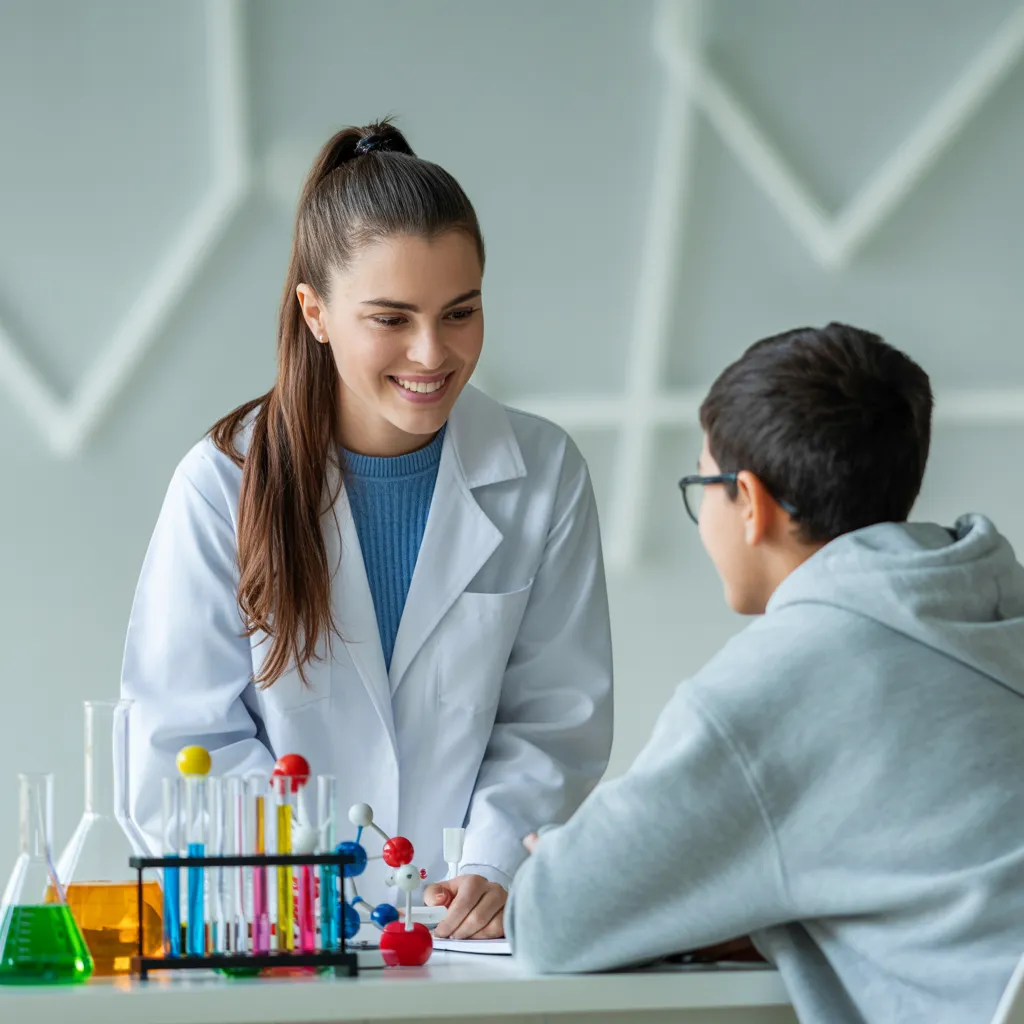
The Importance of Chemistry in Education
While various subjects establish the basis for a complete education, chemistry proves to be a critical discipline that shapes students' understanding of the natural world. It operates as a bridge joining various scientific fields, including biology, physics, and environmental science. By examining the properties and interactions of matter, students gain insights into essential processes that govern living organisms and the natural world.
Chemistry develops logical reasoning and analytical capabilities, prompting students to utilize theoretical concepts to everyday circumstances. Mastering chemical reactions and principles boosts their capability to make informed decisions about health, technology, and environmental issues. Additionally, chemistry promotes curiosity and innovation, as students begin to question and explore the complexities and nuances of substances and their reactions.
In an increasingly scientific and technological society, a robust foundation in chemistry arms students with the knowledge necessary to pursue diverse career paths and contribute meaningfully to advancements in both scientific and industrial sectors.

Benefits of Customized Tutoring
One-on-one tutoring in chemistry provides numerous benefits that enhance student learning and comprehension. One key advantage is the customized approach to instruction, permitting tutors to adapt their teaching methods to match each student's specific learning style and pace. This tailored focus encourages a more profound understanding of challenging topics and promotes confidence in problem-solving.
Furthermore, personalized tutoring supplies targeted support in subjects where students may struggle, permitting them to address specific challenges successfully. The one-on-one interaction facilitates open communication, permitting students to ask questions without holding back.
Moreover, personalized tutoring facilitates the development of efficient study habits and critical thinking skills, necessary for mastering chemistry concepts. By creating a supportive learning environment, tutors can encourage students and instill a enthusiasm for the subject. In the end, the merits of personalized tutoring contribute significantly to enhanced academic performance and a more profound appreciation for chemistry.
Core Topics Examined in Chemistry Tutoring
During chemistry tutoring sessions, students concentrate on fundamental chemical principles that serve as the foundation for the subject. Also, they master important problem-solving skills to tackle diverse challenges effectively. Together, these concepts deliver a solid foundation for mastering and applying chemistry.
Essential Molecular Principles
A thorough comprehension of fundamental chemical principles is essential for students striving to excel in chemistry. These principles represent the backbone of the subject, including concepts such as atomic structure, chemical bonding, stoichiometry, and the laws of thermodynamics. Proficiency in atomic theory empowers students to understand how atoms interact, while knowledge of bonding types—ionic, covalent, and metallic—helps explain the properties of different substances. Stoichiometry assists in the calculation of reactants and products in chemical reactions, enabling students can predict outcomes accurately. Furthermore, understanding thermodynamics familiarizes students to energy changes during reactions. By mastering these foundational concepts, students develop the critical thinking and analytical skills essential to approach more advanced topics in chemistry, creating a path to academic success.
Techniques for Resolving Issues
Establishing upon a solid foundation of fundamental chemical principles, effective problem-solving techniques are essential for students traversing the complexities of chemistry. These techniques include a variety of strategies, including dimensional analysis, the use of chemical equations, and logical reasoning. Students learn to break down complex problems into manageable parts, which aids in understanding the relationships between different variables. Additionally, mastering the art of identifying relevant information from a problem statement is vital. Through practice, students develop the ability to approach problems systematically, applying appropriate formulas and concepts with confidence. Chemistry tutoring focuses on these overview techniques, helping students not only to reach correct answers but also to understand the underlying processes, fostering a deeper appreciation for the subject.
How to Find the Ideal Chemistry Tutor
Choosing the right chemistry tutor is essential for a student's academic success, particularly when the subject presents challenges. Parents and students should consider multiple factors when making this decision. First, the tutor's qualifications and experience in teaching chemistry are fundamental. A strong educational background in the subject can enhance the learning experience.
Following this, personal compatibility is essential; a tutor's teaching style should complement the student's learning preferences. A trial session can serve to identify if this fit exists. In addition, availability and flexibility in scheduling are critical to accommodate the student's packed life.
Furthermore, gathering recommendations from colleagues or academic institutions can offer valuable insights. Online reviews and testimonials might also reveal the tutor's effectiveness. Ultimately, discussing goals and expectations with the tutor before commencing sessions ensures that both parties are aligned. By carefully evaluating these elements, students can find a chemistry tutor who will effectively support their academic journey.
Techniques for Productive Learning in Chemistry
Chemistry learning effectiveness can be improved through diverse strategies that accommodate different learning styles. Utilizing active learning techniques, visual learning tools, and consistent practice with problem-solving can markedly improve comprehension and retention. These methods promote active participation and enable a more thorough grasp of complicated concepts.
Active Learning Strategies
Although traditional lecture-based instruction has its place, active learning techniques have been proven to substantially improve student engagement and retention in chemistry. These techniques involve interactive strategies such as group discussions, problem-solving sessions, and hands-on experiments, permitting students to actively engage in their learning process. By encouraging collaboration, students can share varied perspectives, leading to deeper understanding of complex concepts. Moreover, techniques like peer teaching and case studies encourage critical thinking and application of knowledge. Regular feedback during these activities further supports student development. Ultimately, integrating active learning methods into chemistry tutoring not only fosters a more stimulating learning environment but also equips students with the skills necessary to excel academically and apply their knowledge successfully in real-world situations.
Visual Study Aids
Visual educational aids fulfill a critical purpose in strengthening comprehension and memory of chemical ideas. These resources, including diagrams, graphs, and molecular representations, allow learners to picture intricate structures and mechanisms. For instance, molecular models allow learners to manipulate atoms and see spatial relationships, promoting a deeper understanding of bonding and reactions. Additionally, concept maps can illustrate connections between various chemical principles, aiding in the organization of knowledge. Interactive virtual experiments also increase involvement by permitting students to examine conditions that could be hard to recreate in a laboratory context. Through incorporating visual educational resources into their coursework, learners can develop a more natural understanding of chemistry, eventually enhancing their academic achievement and self-assurance in the discipline.
Practice in Problem Solving
Numerous students discover that steady practice with problem-solving boosts their understanding of chemistry concepts. Engaging with a wide array of chemistry problems enables students to apply theoretical concepts to hands-on applications, reinforcing their learning. Consistently working through problems helps pinpoint areas of weakness, allowing targeted study and improvement. Moreover, working through problems alongside a tutor can present diverse approaches and techniques, cultivating a deeper understanding of the material. Incorporating practice exams and timed quizzes can also simulate real-test conditions, encouraging effective time management and decreasing anxiety. Finally, organized problem-solving practices not only develop confidence but also sharpen critical thinking skills, vital for success in chemistry and beyond. Consequently, steady practice is vital for attaining academic excellence in this demanding subject.
Inspiring Success Stories: Students Who Succeeded Using Tutoring
While students dealt with chemistry's complexities, individuals who engaged tutoring services typically uncovered a life-changing route to achievement. A student named Emily, had difficulty grasping chemical reactions, leading to stress and declining grades. After collaborating with an attentive tutor, she didn't just comprehend the principles but additionally formed a genuine interest in the subject, consequently securing high marks on her assessments.
Along the same lines, John, who had before felt daunted by complex formulas, received benefit from individualized guidance that dealt with his specific learning needs. With regular support, he became proficient in problem-solving techniques and built confidence, which manifested in his improved performance.
These achievement stories illustrate how individualized tutoring can generate a significant difference in a student's academic experience. By developing a better understanding of chemistry, tutors empower students to surpass barriers, leading to enhanced grades and a revitalized enthusiasm for learning. Such developments showcase the significant influence of devoted educational support in scholarly excellence.
Tips to Maximize Your Tutoring Sessions
Optimizing tutoring sessions requires a strategic approach that boosts learning efficiency. First, students should arrive prepared with specific questions or topics they find challenging. This allows the tutor to zero in on the areas requiring the most attention. Additionally, setting clear goals for each session can offer direction, helping students measure their progress over time.
Participating actively is key; students should engage in discussions, tackle problems throughout the lesson, and seek clarity when required. This interactive approach fosters deeper understanding. Additionally, taking notes during tutoring sessions can help reinforce learning and function as a valuable study resource later.
Finally, students should regularly practice outside of tutoring sessions, applying what they have learned. Feedback from tutors can direct this practice, making certain that students continue on the right track. By utilizing these strategies, students can get the most out of their chemistry tutoring sessions and reach their academic goals more effectively.
Common Questions
What Credentials Should I Seek in a Chemistry Tutor?
In the search for a chemistry tutor, you should seek relevant educational qualifications, teaching experience, effective communication skills, and a proven track record of helping students improve their comprehension and results in chemistry.
What Do Chemistry Tutoring Sessions Usually Cost?
Chemistry instruction sessions typically range between $30 to $100 per hour, influenced by the tutor's professional qualifications, experience, and geographical location. Group sessions often feature lower rates, while specialized advanced tutoring can raise costs.
Is Online Tutoring as Effective as Face-to-Face Sessions?
Online tutoring can be as effective as in-person sessions, determined by the tutor's abilities and the student's involvement. Technology supports interactive learning, providing individualized instruction and instant feedback, which can improve grasp and retention.
What Schedule Should I Follow for Tutoring Sessions to See the Best Results?
Scheduling tutoring sessions 1-2 times a week typically produces outstanding results. This frequency allows for consistent reinforcement of concepts while giving sufficient time for reinforcement and practice, ultimately improving retention and understanding of the material.
Which Materials Can Enrich My Chemistry Tutoring Sessions?
Practice problem sets, interactive simulations, online videos, and textbooks can greatly enhance the chemistry tutoring experience. Furthermore, study groups and educational apps deliver multiple resources and approaches for deeper understanding and retention of intricate subject matter.